Where, why and how you win - codified for teams and agents.

We've worked with GTM teams at:

GTM MEMORY

CODIFIED MEMORY + SKILLS

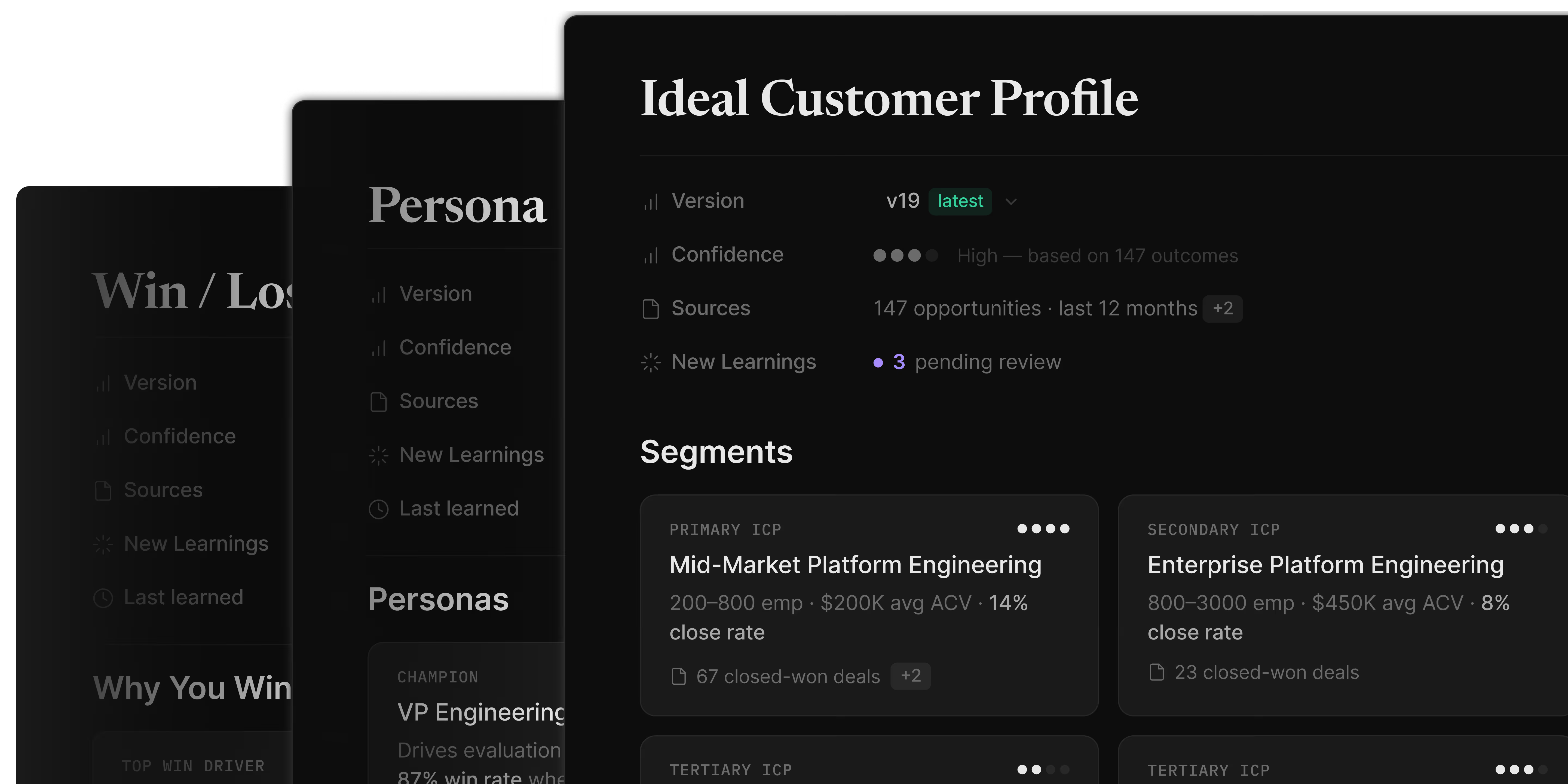
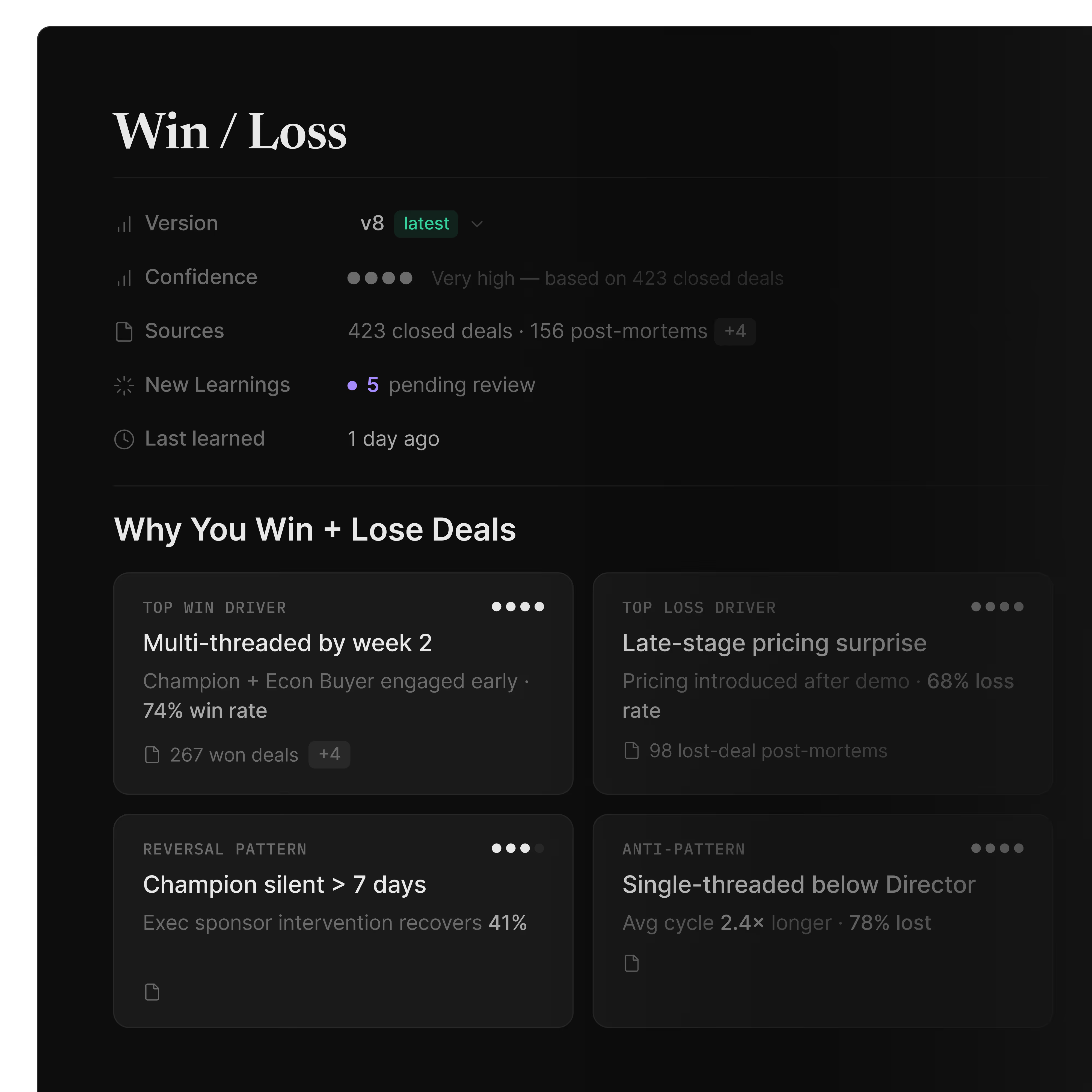
Create alignment to your ICP, personas, sales process, messaging, and more - by defining the memory and skills of your GTM.
GTM MEMORY

How you sell, why you win - codified once, then called on for every decision.

01

Connect everyone to how your team wins.

ICPs, personas, sales process, qualification, objection handling - all codified from the deals you are winning.

Signal unification →

02

Turn your best rep's knowledge into skills.

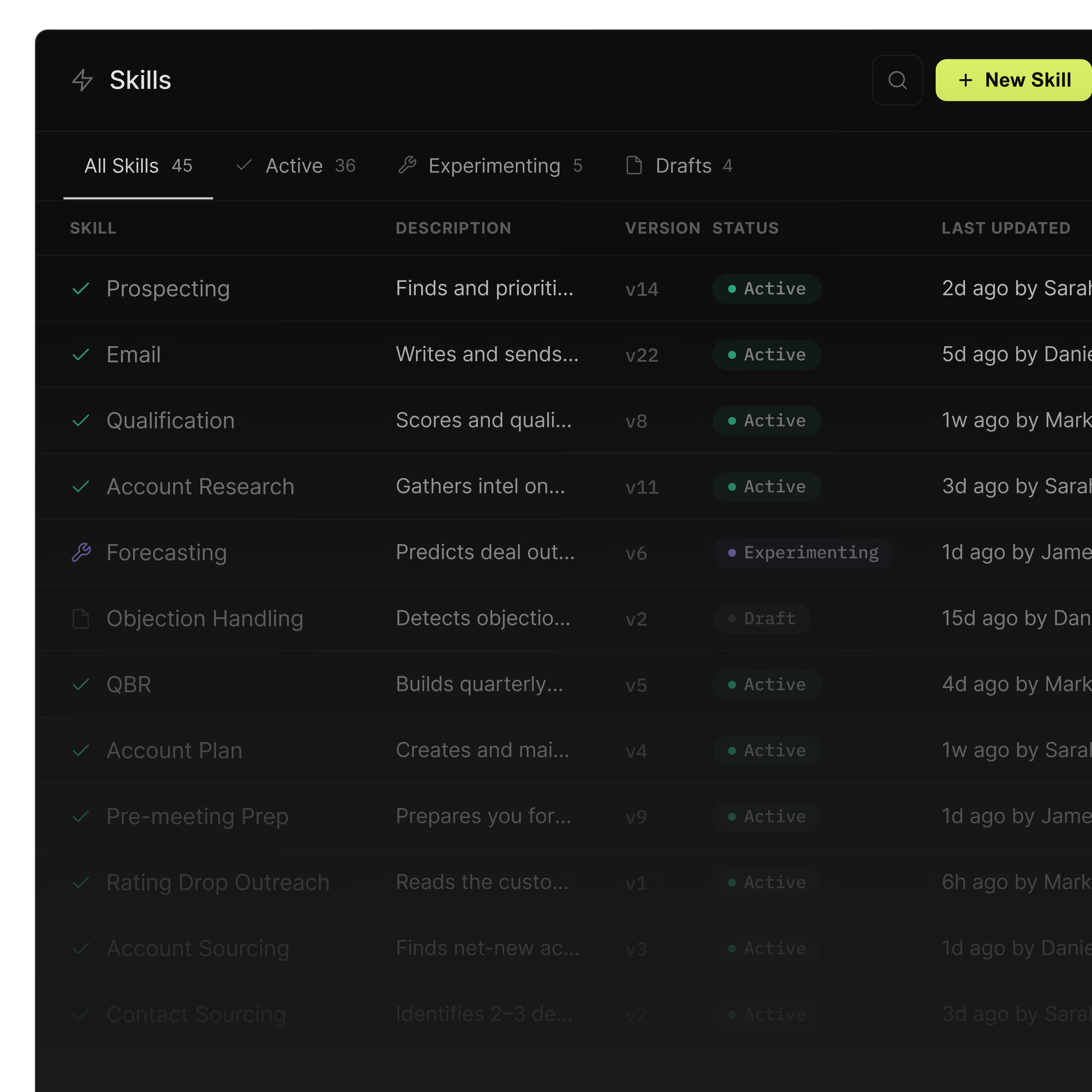
The steps your best rep takes instinctively, now codified into skills, and executable by every agent and callable by each rep.

Committee graph →
03

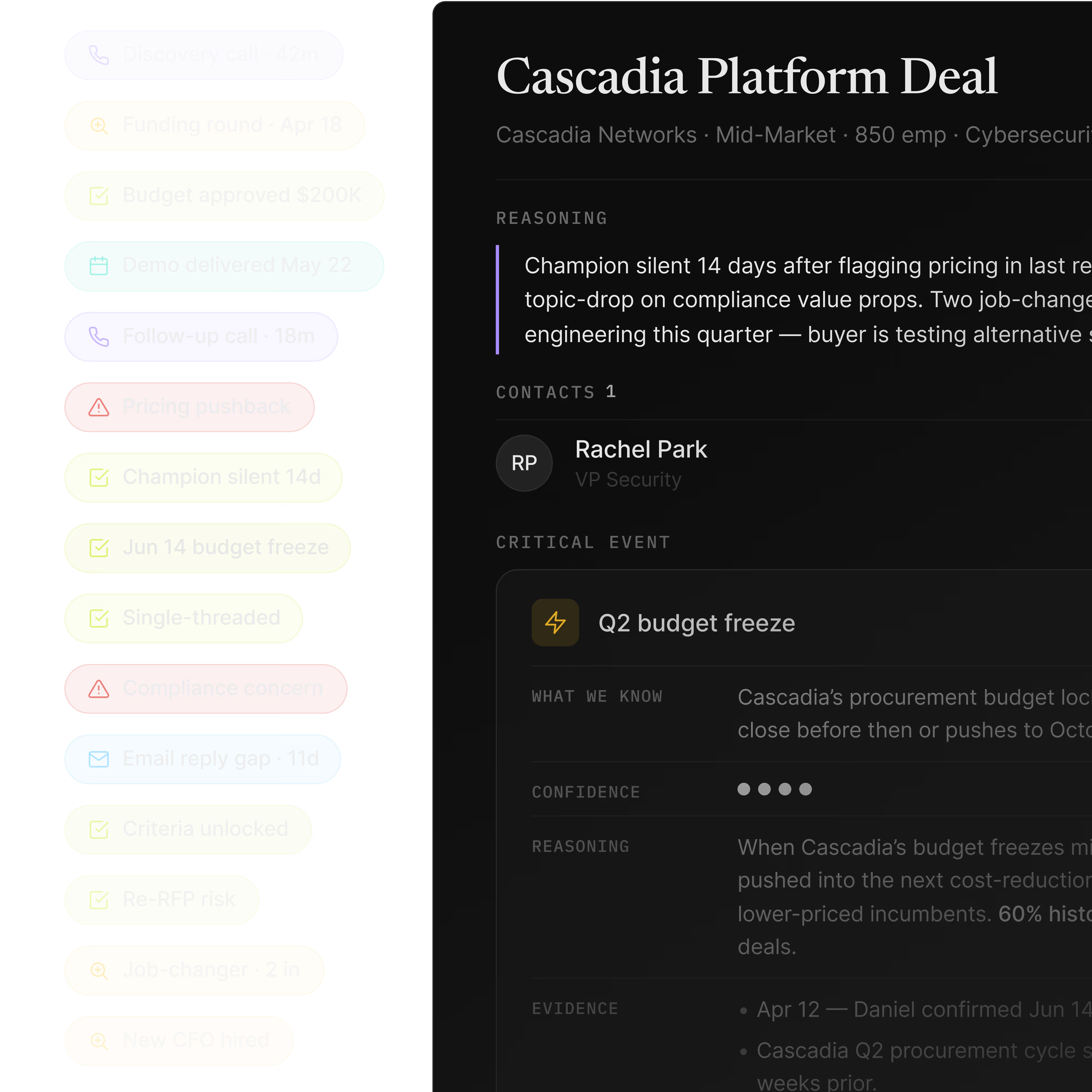
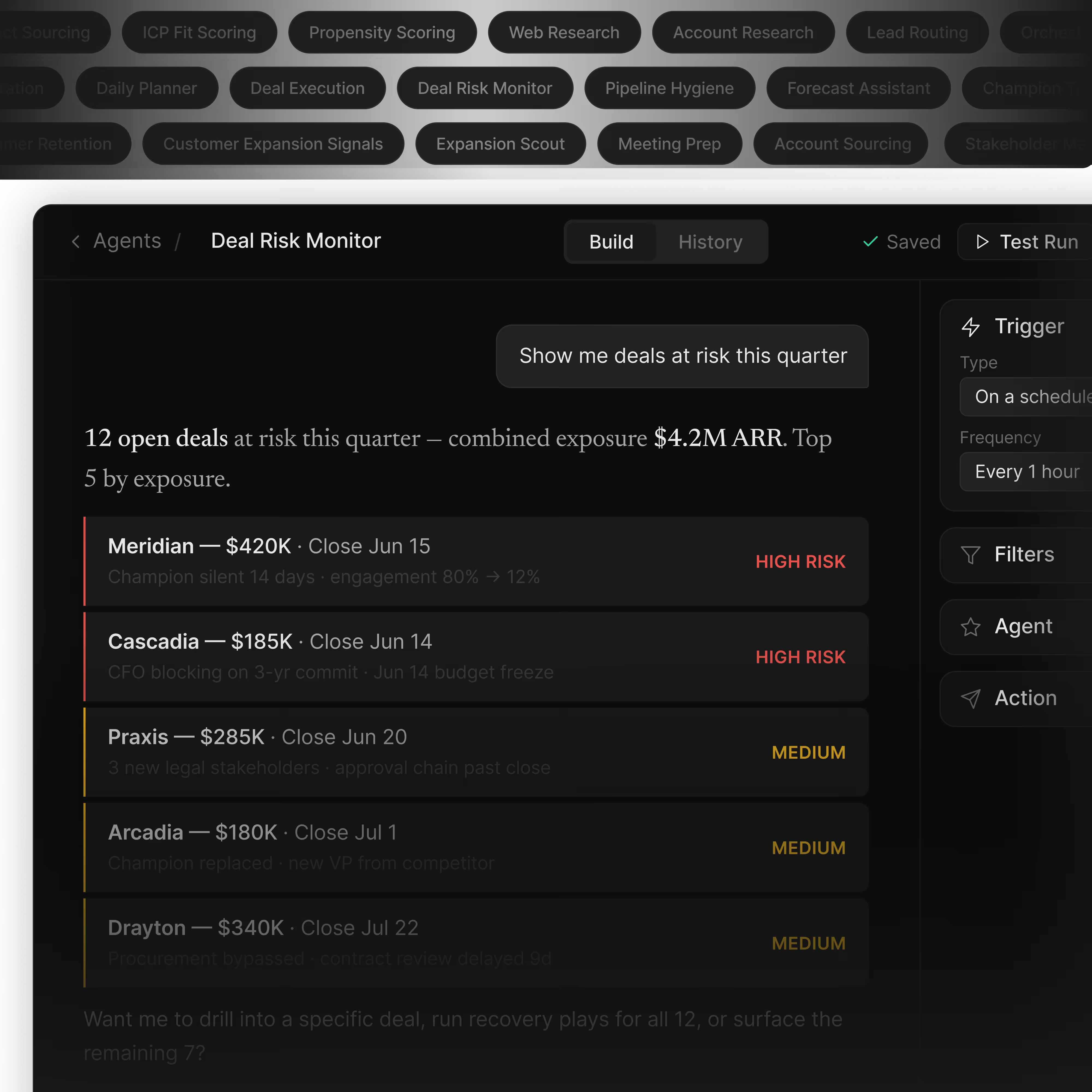
Reveal risk and opportunity in your pipeline.

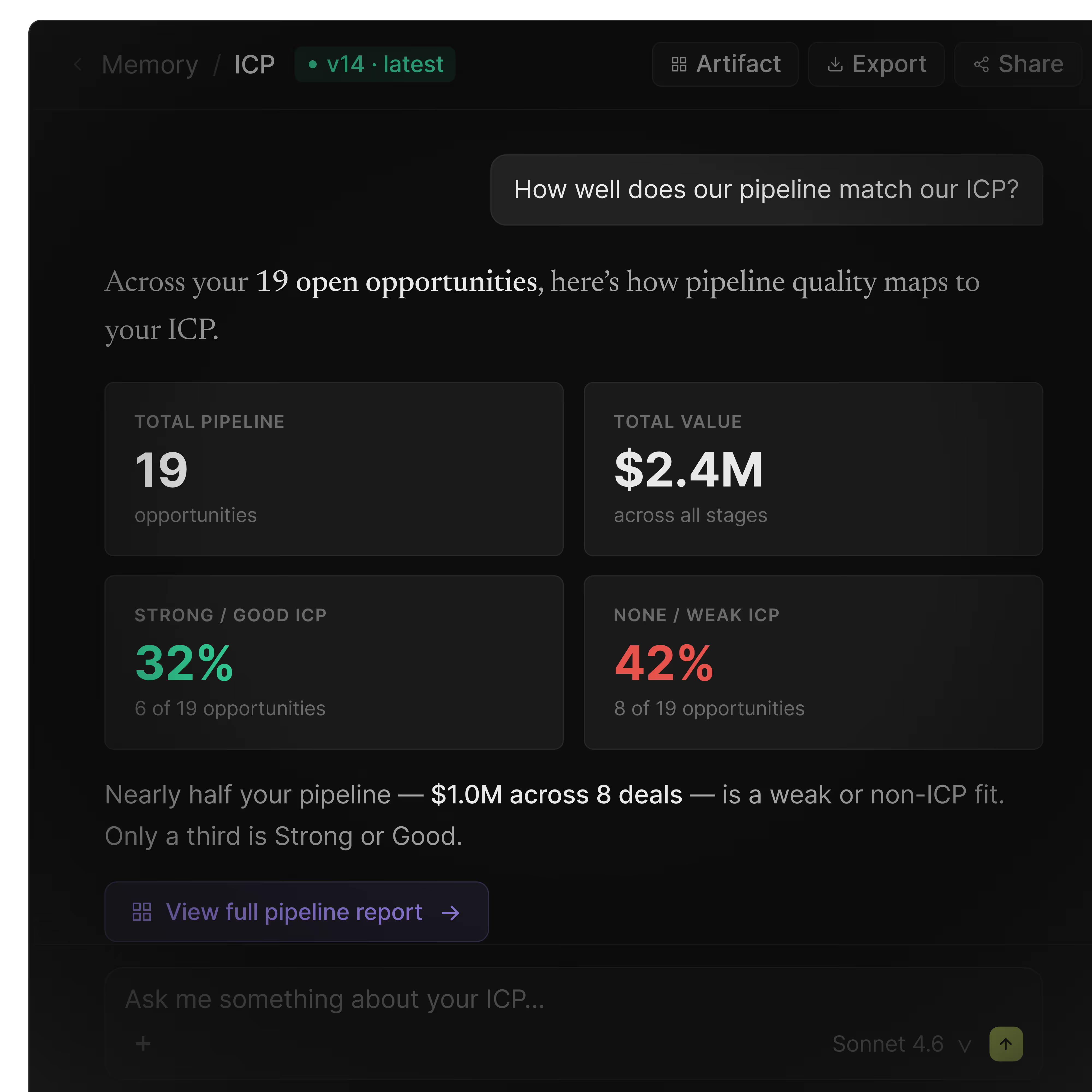
Agents call on your shared GTM memory - enabling them to answer questions with reasoning grounded in your success factors.

Decision traces
04

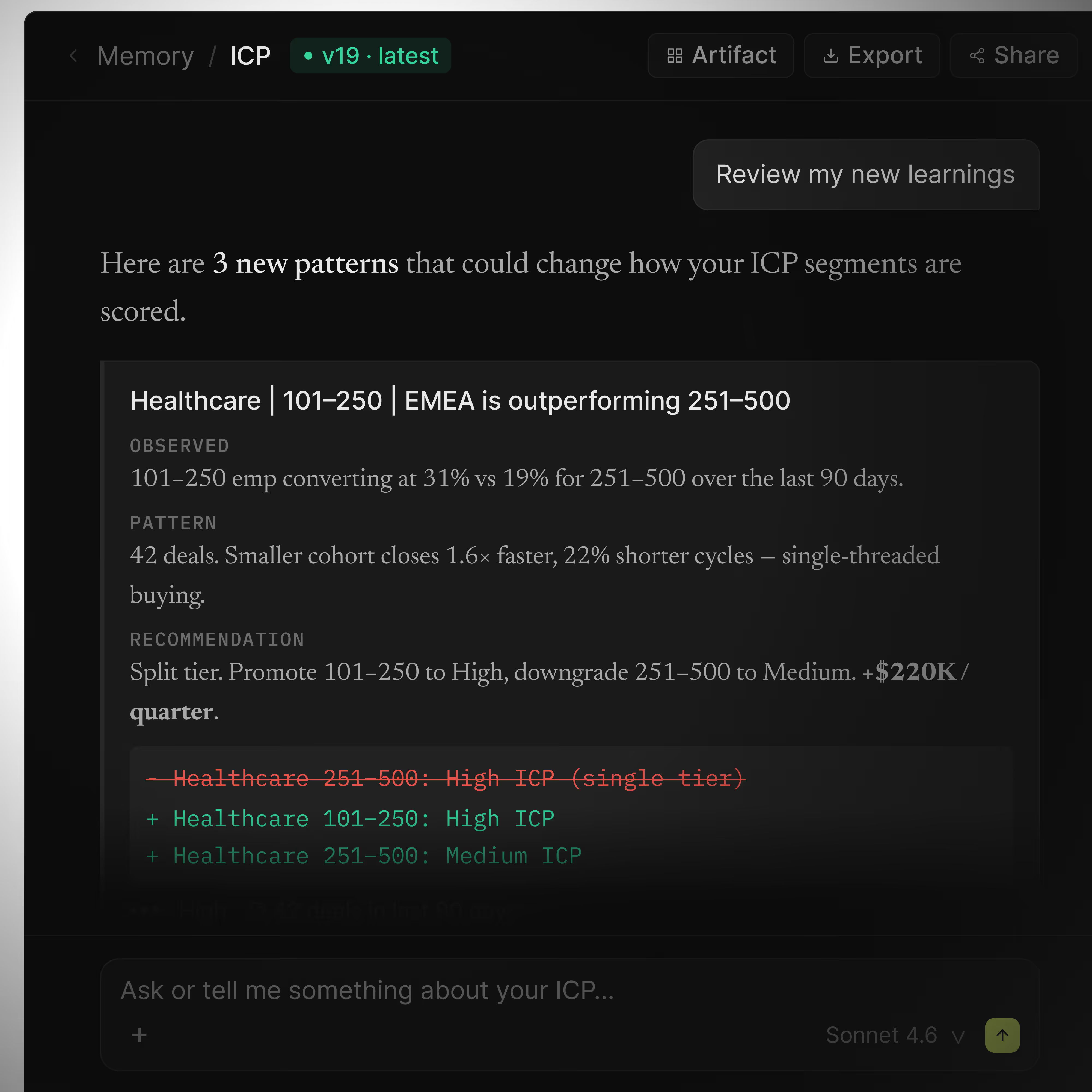
Sharpen your memory and skills with every outcome.

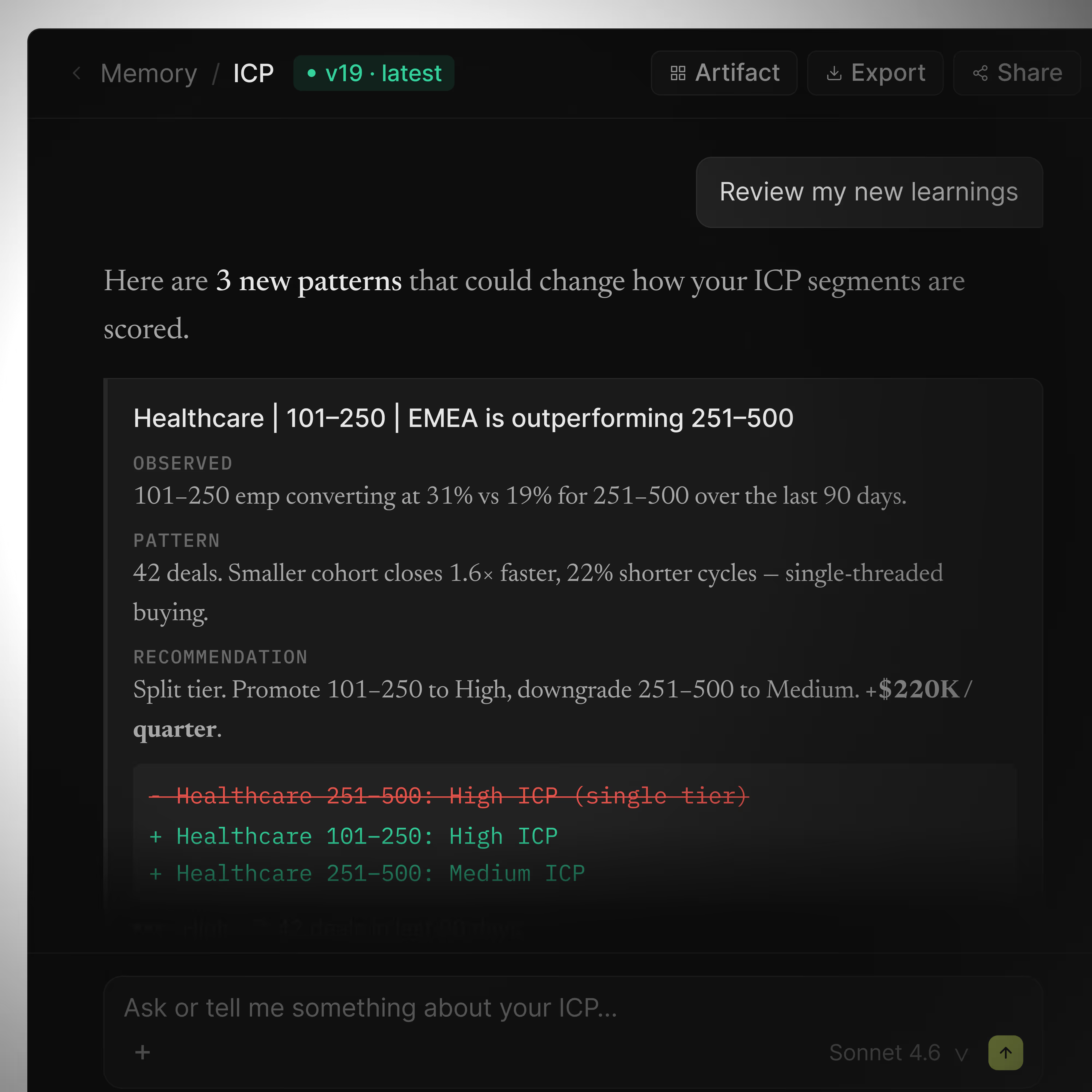
Every closed deal presents opportunities to improve. The system sees the trends and upgrades the system, making the improvements available to all.

Context query
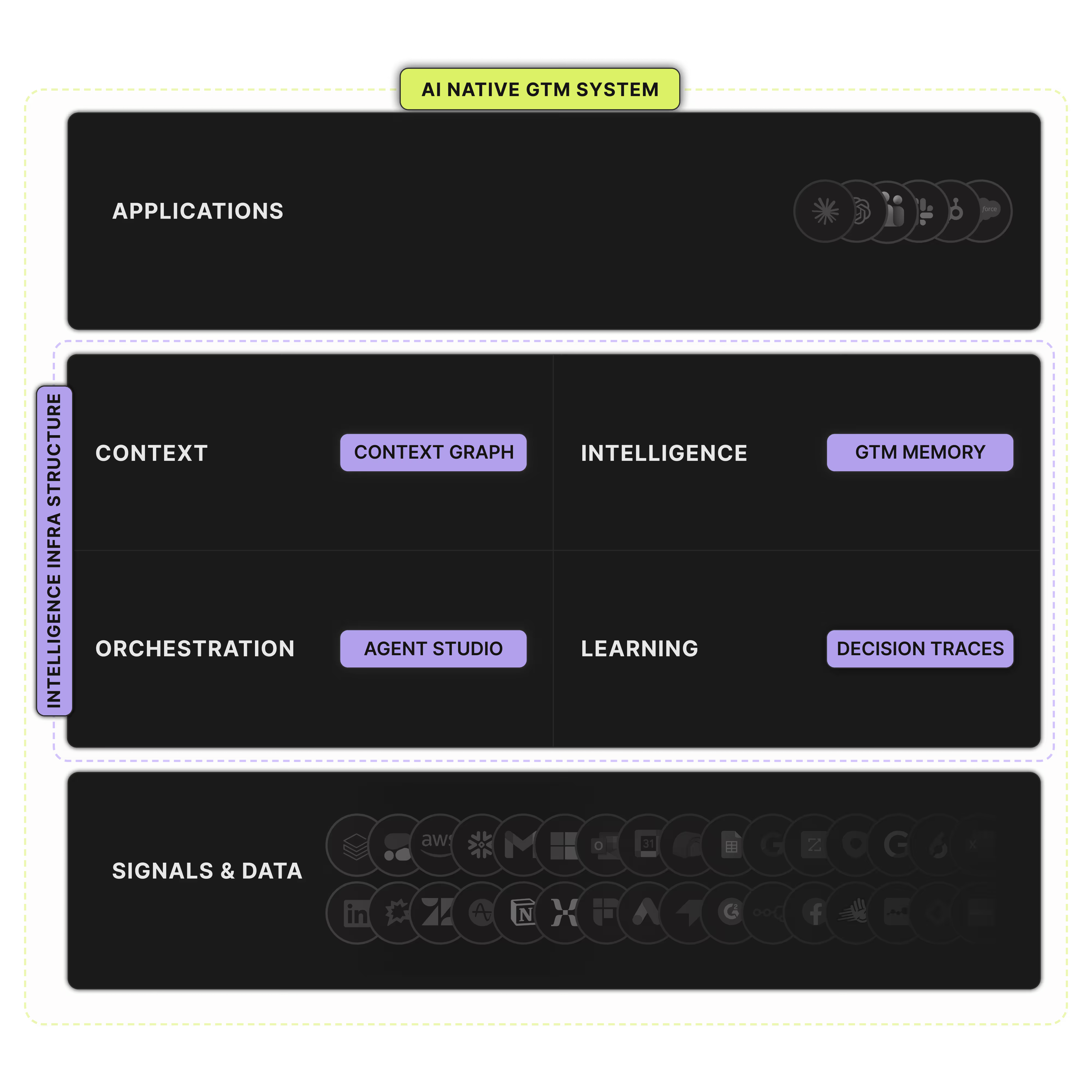
GTM Intelligence Infrastructure

Now GTM teams and agents run at machine speed, with shared memory.

Live · Cycles every 5s
CONTEXT GRAPH

Live GTM State

Instant visibility into what’s happening, what’s changed and what to do next on 100,000s of account, deals + contact records.

Explore Context GRaph
AGENT STUDIO

Agentic Orchestration

Agents run continuosly on live context, memory and skills. Surface risk, reveal opportunity, or automate repetitive jobs-to-be-done - deploy agents who decide, act and learn from every outcome.

Explore Agent Studio
DECISION TRACES

Learning

Every outcome refines and upgrades your GTM. The system identifies the opportunities, you control what changes and why.

Explore Learning
GTM Intelligence Infrastructure

The infrastructure your AI-native GTM runs on.

The AI-native GTM system that understands, decides, acts and learns from every deal.

RUN YOUR GTM DIAGNOSTIC

OUR WORK WITH LEADING B2B SAAS GTM TEAMS

From the playbook stuck in your top rep's head, to executable memory that runs across the team.

"Our best AE used to be the only person who knew how to handle our biggest competitor. Now every rep does, and the agents prep them for it before the call. Our knowledge no longer walks out the door."

70%

FASTER NEW-HIRE RAMP

34%

SHORTER SALES CYCLES

2.6X

greater sales velocity

Ready when you are

Connect every rep + agent to how you sell, and why you win.

See what your best-performing ICP, personas, sales process + messaging is, or start with a 30-minute GTM Diagnostic.

FAQ

More about GTM Memory.

If it's not here, we'll answer it live.

Talk to us
We already have our playbook in MS Office / Google Drive / Notion. Why do we need this?

Those tools store documents. Memory runs them. A playbook in Notion is a page someone reads (or doesn't). A Skill in Memory is the same playbook, executable by an agent - it preps the rep, drafts the follow-up, updates the CRM, scores the deal. Documentation that sits on a wiki and documentation that runs in your operation are two different things. Keep your document store. Codify the bits that should run.

Our process isn't documented. How do you codify what we actually do?

By learning from what's already happened. The system reads your closed-won and closed-lost deals - the calls, the emails, the stage movement, the stakeholder pattern - and surfaces what your top performers actually do. We then sit with you to confirm: "this is what your best reps do; do you want this to become the team standard?" Most teams find their codified Memory is sharper than the playbook they tried (and failed) to write themselves.

Who owns the Memory? Does the system change it without permission?

You own it. Every change is proposed by Learning, approved by you, and versioned. If you don't approve a change, Memory doesn't update. If you approve a change and it makes things worse, you reverse it - v19 reverts to v18, instantly, across the team. The system surfaces patterns. You decide what's canon.

How does Memory adapt when our ICP changes?

It surfaces the change before you ask. "101–250 employee Healthcare in EMEA is outperforming 251–500 by 1.6x. Recommend promoting it to High tier." Learning spots the pattern across your closed outcomes; you approve the change; the ICP version increments; every agent that uses ICP scoring switches over the same day. No re-training, no re-deployment.

We're worried the system will codify bad habits. How do you stop that?

Four things. 1) Memory codifies from outcomes, not activity. If a rep makes 400 calls a week but never closes, the system doesn't treat their behaviour as the standard. 2) every codified Skill carries the evidence that justified it; you can see why it's in Memory before you approve it. 3) you stay in the loop on every upgrade. 4) every agent run, every learning applied is captured, giving a fully auditable trail. The system never silently changes how your team sells.

Can we have different Memory for different products, regions or teams?

Yes. Memory is segmented by anything you need - product line, region, ICP tier, sales motion. A skill that runs for your EMEA mid-market team can be different from the skill that runs for North American enterprise. They version independently. The Infrastructure-level Memory (tone of voice, brand frames, company-wide process) inherits down. Local Memory overrides where it matters.

How does this work with our existing CRM custom fields?

Memory writes back. Every Agent + Skill that runs - qualification, scoring, buyer roles, next-step recommendation - can write its output to any custom field on your record. The Memory layer is the brain; your CRM stays the system of record. RevOps gets back the time spent reconciling fields, because the system that produces the answer is the system that fills the field.

Can agents run Memory without humans in the loop?

For low-risk Skills, yes - account research, enrichment, scoring, draft generation. For higher-stakes Skills: sending the email, advancing the stage, contacting a customer, there's a human approval step by default. You set the line. The trace of every agent action is captured, so you can move a Skill from "needs approval" to "auto-run" once you've seen it perform.

What Memory and Skills can I actually set up?

A foundation comes out of the box - and you build on top of it. Day one, you get a starter library: Memory for ICPs, personas, sales process, competitive frames, tone of voice and win patterns; Skills for account research, meeting prep, pipeline review, qualification, follow-up drafting, deal scoring, coaching briefings and more. We tune the foundation to your business in week one. Then you build your own. You describe it in natural language; the system codifies it; you version it, govern it, ship it across the team.

How is this different from memories and skills in Claude?

Claude's memories and skills work at the level of one user, one conversation. Revenue Labs Memory and Skills work at the level of your entire GTM. Claude memories store personal preferences - your name, your tone, what you're working on. Revenue Labs Memory codifies how your organisation sells - ICPs, personas, sales process, win patterns. Claude skills are tools Claude can call. Revenue Labs Skills are jobs-to-be-done your team runs at scale: account research, meeting prep, pipeline review, follow-up - executable by every agent, on every record, every day.